viernes, 1 de abril de 2011

Bernardo de Galvez

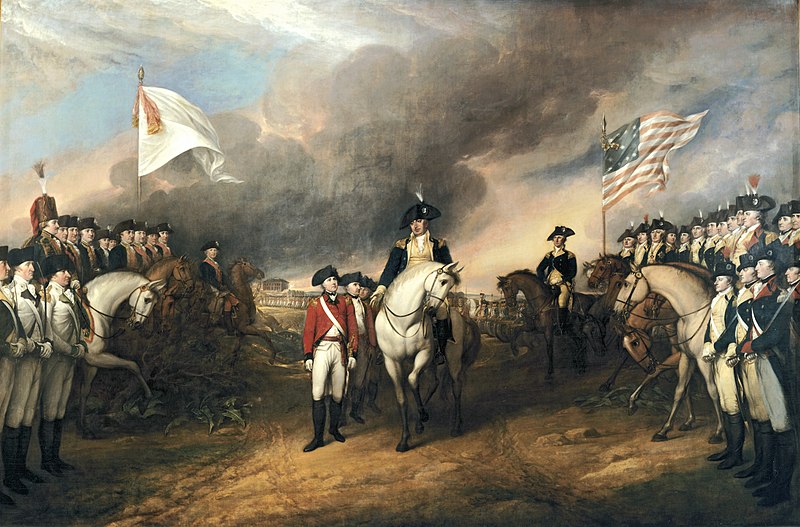
Bernardo de Gálvez, was born on July 23, 1746, in Malaga, Spain and died on November 30, 1786, in Mexico City.  He was a Spanish military leader and the general of Spanish forces in New Spain who served as governor of Louisiana and Cuba and as viceroy of New Spain.
Gálvez helped the 13 Colonies in their war for independence and led the Spanish armies against Britain in the Revolutionary War, defeating the British at Pensacola and reconquering Florida for Spain. He spent the last two years of his life as viceroy, succeeding his father, who had been viceroy before him. Galveston, Texas and other places are named for him.
Gálvez was born in Macharaviaya, a village in the province of Malaga, Spain, on July 23, 1746. He studied military sciences at the Academia de Ávila and at the age of 16 he participated in the Spanish Invasion of Portu. During the invasion he was promoted to Lieutenant. He arrived in New Spain, then Mexico, in 1762. As a captain, he fought the Apaches, with his Opata Indian allies. In 1770, he was promoted to commandant of arms of Nueva Vizcaya y Sonora, northern provinces of New Spain, and New Mexico.
In 1772, he returned to Spain with his uncle, Jose de Galvez. Later, he was sent to Pau, France with the Cantabria regiment. There, he learned to speak French, which served him well when he became governor of Louisiana. He was transferred to Seville, in 1775, and then participated in the disastrous expedition of O'Reilly. After capturing the fortress that guarded the city, he was promoted to lieutenant colonel. He then became a professor at the military academy of Ávila.


viernes, 18 de marzo de 2011

George Roger Clark

George Roger Clark born on November 19, 1752 he was a soldier from Virginia and had the  highest rankingas the  American military officer on the northwestern frontier during the American Revolutionary War. He served as leader of the Kentucky that then was part of Virginia militia throughout much of the war. Clark is best known for his celebrated captures of Kaskaskia and Vincennes , which greatly weakened British influence in the Northwest Territory. Because the British ceded the entire Northwest Territory to the United States in the 1783 Treaty of Paris, Clark has often been hailed as the "Conqueror of the Old Northwest."
Clark's military achievements all came before his 30th birthday. Afterwards he led militia in the opening engagements of the Northwest Indian War, but was accused of being drunk on duty. Despite his demand for a formal investigation into the accusations, he was disgraced and forced to resign. He left Kentucky to live on the Indiana frontier.Clark spent the final decades of his life evading creditors, and living in increasing poverty and obscurity. He was involved in two failed conspiracies to open the Spanish-controlled Mississippi River to American traffic. After suffering a stroke and losing his leg, Clark was aided in his final years by family members, including his younger brother William, one of the leaders of the Lewis and Clark Expedition. Clark died of a stroke on February 13, 1818.

Deborah Sampson

Deborah Sampson was born on the 17th of December, 1760 her parents were Jonathan and Deborah Bradford Sampson. She had seven more brothers and sisters.
With the Thomas family, she gained a good education. She often learnt from the books lying around the house and would go along with the Thomas’ sons to school. There she learnt a lot. She would also do work around the house. She had grown to become very interested in the politics of the time.
When she turned 18, she could not serve as with the Thomas household. But she lived with them for 2 more years, and worked as a weaver and a teacher at the local school.
In 1782 she enlisted as Robert Shurtlieff and became a part of the Light Infantry Company of the Fourth Massachusetts Regiment. She was tall, and strong as the rest of the men. She had the strength enough for the job. She fought in several encounters while in the army. In July 1782, she was hit by a musket ball in her thigh and got cut in her forehead. She left the hospital after her head wound was treated so that her secret would not be revealed. She then removed the musket ball with a penknife and sewed the wound herself. Her leg never healed fully but her secret was safe. In 1783 she served as a waiter for General John Patterson.
During the same year, she came down with a fever and was taken care of by a doctor called Barnabas Binney. He discovered her secret, but did not reveal it. He took her to his home where his wife and daughters took care of Deborah.

In September 1783, the Treaty of Paris was signed and Dr. Binney sent Deborah to George Washington with a note. Her secret was finally out but George Washington never said anything. She received an honorable discharge and was sent back home with money to cover her travel fare.


jueves, 17 de marzo de 2011

Continental Army

The Continental Army was an amy formed by the American Revolutionary War by the colonies that became the United States of America. It was established as a resolution of the Continental Congress to revolt in military efforts against the rules of Great Britain.Itg was mainly controlled by militias and troups that were lead among their colonies. George Washington was the cheif of all this army in the Revolutionary War.

Most of the army dissolved in 1783 after the Treaty of Paris that ended the war. The remaning units were probably the nucleus of what became the Army of the United States.

George Washington's Presidency

As a president, Washington took over in New York in a sutile way. In a way to accomodate the excecutive power to inspire future presidents. He youred around the 13 states to get to know each of them.

He was reelected president in 1792, it was a year of crisis since he had personal conflicts within his gabinet about the war between France and England. He seeked peace with Great Britain. So they could start close commercial ties with them. His acceptance of the 1794 Jay's Treaty, settled outstanding differences between the United States and Britain but Democratic-Republicans viewed it as a surrender to British demands, reviving revolution against the president.

viernes, 25 de febrero de 2011

Thomas Jefferson

Thomas Jefferson was the third president of America and he also was a leading plitical thinker. He was born in Shadwell in Albemarle Country Virgina. He graduated form the William and Mary college, and studied law and administrated a landed state that he inherited from his father. In 1769 he was already known as a political issues writter. Jefferson wrote some of the instructions for the virginia delegates in the First Continental congress, and also helped in the Second Continental Congress. But he is mostly known for writting the Declaration of Independence.
 He was sent to France as America's diplomatic representative, and he came back until the French Revolution started. In 1789, he  became the United States' first secretary of state. During the Washington administration, he was like the most important point of the Democratic-Republican forces. Then in 1796, he became vice-president in the John Adams administration. And then he became president of the United States from 1801–1809.
There are many good things to say about thomas Jefferson. He was the greatst intellect president of the United States, he also loved to have knowledge about many subjects, he also was a musician, writer, and philosopher, he new several languages, and was also a naturalist. He liked to get into scientific studies which some of them reulted as good benefits.Jefferson was the inventor of the swivel chair and the dumbwaiter. He developed plans for public-school  and also worked to establish religious toleration and freedom by eliminating the tax support of the Anglican Church in his home state.

"Common Sense" By Thomas Paine

A book that caused such a big impact for british but especially for The American colonies was "Common Sense" written by Thomas Paine on January 1776. Since the moment it was published it was immediately the best seller in both, colonies, and British. Because of it, Paine became internationally famous. This book is considered one of the most influential things that helped the American Revolution to occur, it is also one of the most brilliant pamphlets ever written in the English language. The main plot of the book was to explain, or to blame the british monarchy for the unfair things they were doing in the colonies.

The things written in these book helped to encourage the colonies to write their declaration of independence. Most of the ideas of the book were added in the declaration. Paine didnt realize that the book also got a world wide impact, because all the rights that he described the coloies wanted, were also the rights every single person in the world wanted to have.

Some of the things Paine argud in his book were that that was a good time to separate from England of the size of the colonies and their own capabilities, also he explained how America could build an army as strong as the british. He recommended of making better America´s security and prosperity in trade, because now the could trade with any country they wanted to.Paine also argues that America is sufficiently small  to be united now. So as you can see this book helped people to fight for their rights, and defend the place were they were living.